Triangle Secrets
Hidden waterfalls, camera obscuras, and the weird side of the Oaks
Raleigh has a reputation for being the "polite" part of the Triangle, but if you know where to look, you'll find hidden waterfalls in residential neighborhoods, walk-in camera obscuras in the woods, and the last operating gristmill in Wake County.
1
Cloud Chamber for the Trees and Sky
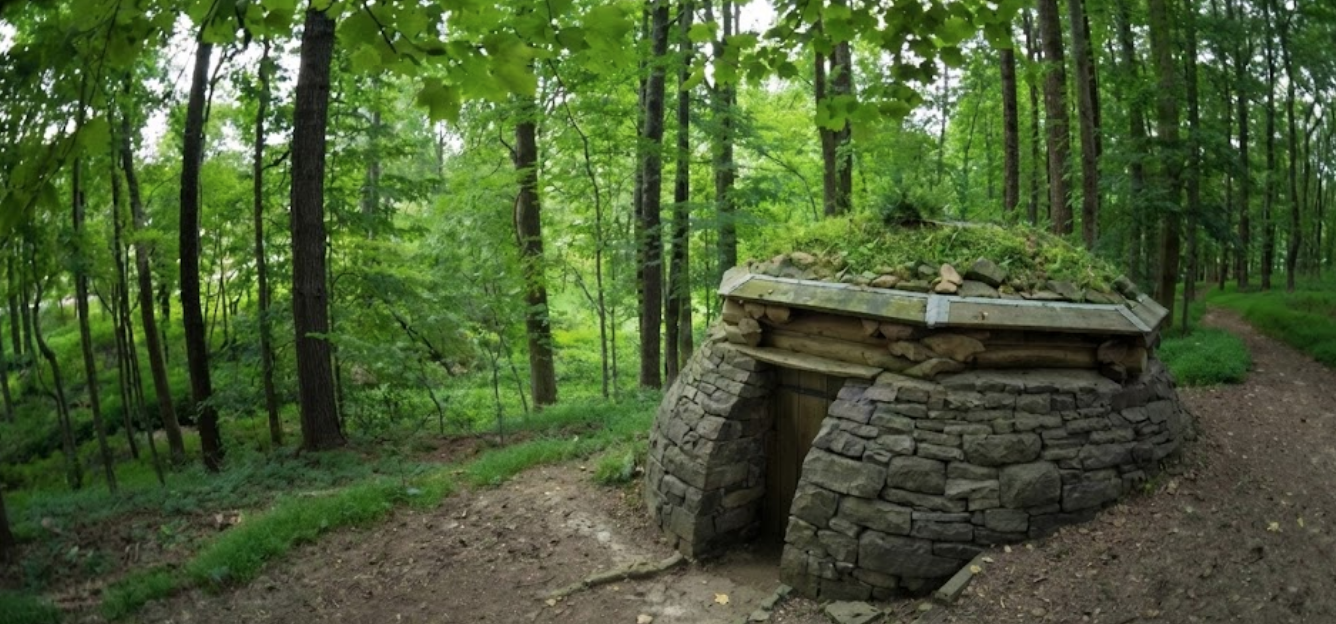
British artist Chris Drury built this walk-in camera obscura in 2003 as a permanent installation in the NC Museum of Art's woodland park. From outside, it looks like something out of a fairy tale — a rustic stone and wood dome resembling a hobbit house or ancient cairn, nestled among the trees. But step inside, and the magic happens. Through a small aperture in the roof, natural light projects a live, inverted image of the surrounding forest canopy onto a white circular disk inside. Trees sway upside-down in real time. Clouds drift across the sky. Birds fly through the projection. It's an ancient technology — the same principle behind the first cameras — experienced in a meditative, almost spiritual way. The chamber is free, always open, and requires no electricity. Most museum visitors miss it entirely, preferring the indoor galleries. That's part of the charm. Featured on Atlas Obscura.
2
Juniper Level Botanic Garden
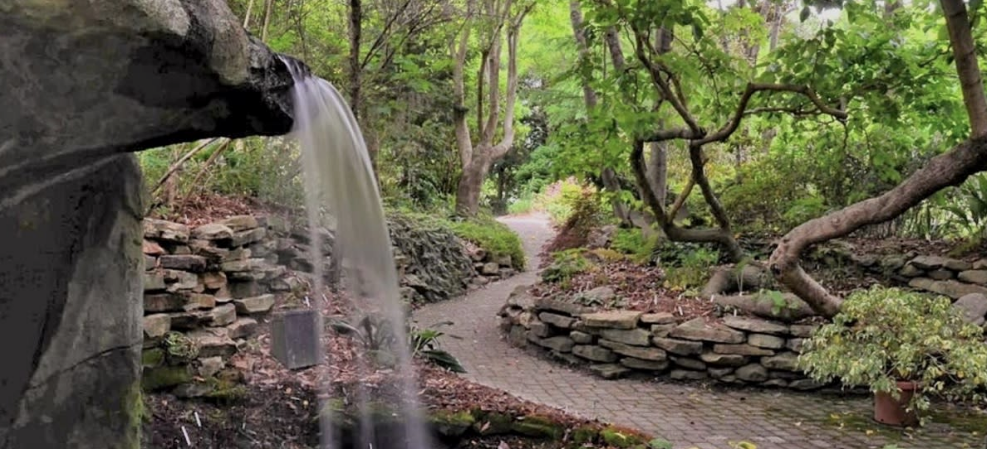
A 28-acre private botanical wonderland tucked in Raleigh's suburbs, cultivated over 30+ years by plantsman Tony Avent. The garden houses one of the most extensive rare plant collections in North America — thousands of species you won't find anywhere else, including plants from expeditions to Asia, South America, and remote ecosystems worldwide. The crown jewel is Mystic Falls, a 20-foot waterfall with a walkway that lets you walk underneath the cascade. Paths wind through themed gardens: a bamboo forest, carnivorous bog, tropical greenhouse, and shaded fern grottos. Avent opens the garden to the public only 4 weekends per year (spring and fall), and reservations fill up fast. Tours are free but require advance booking through the website. This isn't a manicured public garden — it's a living laboratory where rare specimens are tested, propagated, and studied. Serious plant collectors make pilgrimages here.
3
Lassiter Mill Park & Waterfall
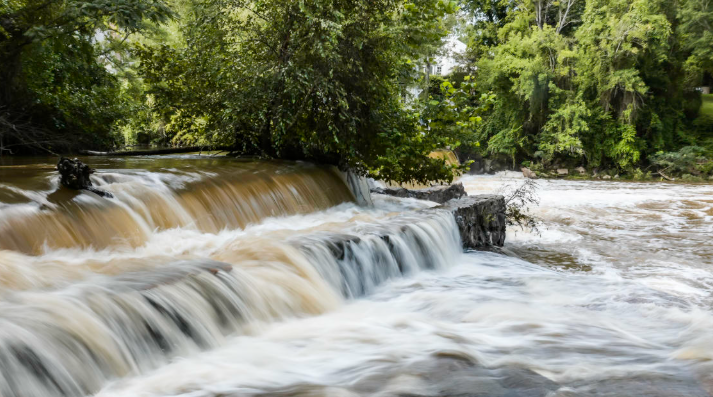
Hidden in a quiet residential neighborhood near North Hills, a small park conceals one of Raleigh's best-kept secrets: a genuine waterfall cascading over an old mill dam. Originally called the "Great Falls of Crabtree," this site predates Raleigh itself — the mill was operating before the city was founded. The waterfall isn't dramatic (maybe 15-20 feet), but finding it tucked behind suburban homes feels like discovering Narnia. Stone remnants of the historic mill are still visible, and a plaque tells the story. The park connects to the Crabtree Creek Greenway, but most people on the trail have no idea the waterfall exists just off the path. Went viral on TikTok when someone posted: "Never would I have guessed there is a magical waterfall in the 'city of oaks!'" Limited parking at the intersection of Lassiter Mill Rd and Lassiter Falls Circle.
Dawn to dusk
Free
Sponsored Pick
Advertisements help support our content
4
Historic Yates Mill
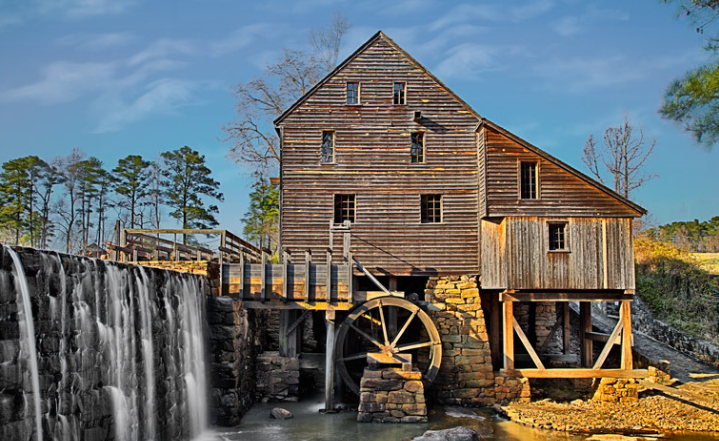
The last operating water-powered gristmill in Wake County — and one of only a few historic automated water mills still functioning in the entire United States. Built around 1756, Yates Mill served the region for over 200 years before closing in 1953. A grassroots restoration effort brought it back to working order in 2005, and today costumed interpreters demonstrate corn grinding on weekends from March through November. The mill survived Hurricane Fran in 1996 (barely — the 250-year-old stone dam burst and had to be rebuilt) and now sits in a 174-acre county park with hiking trails, a 24-acre millpond, and the A.E. Finley Center for Education. Of the 70+ gristmills that once served Wake County, this is the only one still turning. The mill tour is free, and afterwards you can grab ice cream at Howling Cow (NC State's dairy) just up the road.
5
Robertson Millpond Preserve

Bald cypress trees don't belong in the Piedmont—their natural range is the coastal plain, where swamps and blackwater rivers create the wet conditions they need. Robertson Millpond Preserve is a biological anomaly: 85 acres of bald cypress forest 30 minutes from downtown Raleigh, the only such habitat in the region. The millpond was created in the 1800s when a dam backed up the creek; the resulting wetland allowed cypress to colonize far outside their normal range. Today, you can kayak through cathedral-like stands of ancient cypress, their knees rising from the dark water, their canopy filtering the light into something that feels more like Louisiana than North Carolina. Bring your own kayak or canoe—there are no rentals. Arrive at dawn when mist rises from the water and the silence is absolute.
6
WRAL Azalea Gardens
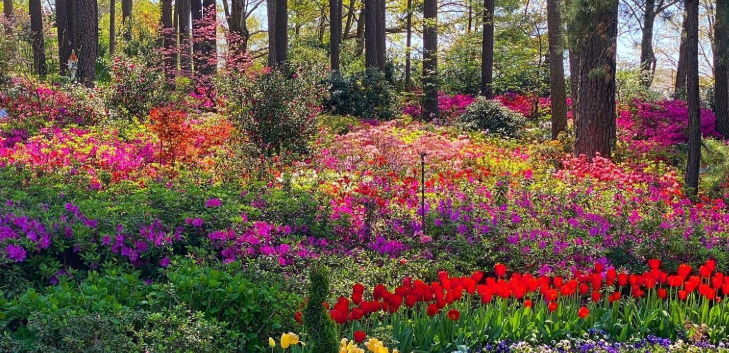
Behind the WRAL-TV studios on Western Boulevard lies a 1.5-acre garden that most Raleigh residents have never heard of — even though it's been there since 1959. A.J. Fletcher, founder of Capitol Broadcasting, created the gardens as a gift to the community. The story goes that before the dedication ceremony, a cold snap threatened to kill the azaleas, so Fletcher had staff bathe the plants in warm water to save them. Today, over 1,000 azaleas representing 30+ varieties bloom each spring, along with hidden sculptures, meandering brick pathways, and secluded benches perfect for reading or escaping. The gardens are free, open dawn to dusk, and almost completely empty most days. Peak bloom is late March through May, when the colors are genuinely spectacular. Weddings are hosted here April through September ($250). It's the kind of place that makes you wonder what else is hiding behind ordinary buildings.
Sponsored Pick
Advertisements help support our content
7
Isabelle Bowen Henderson Secret Garden
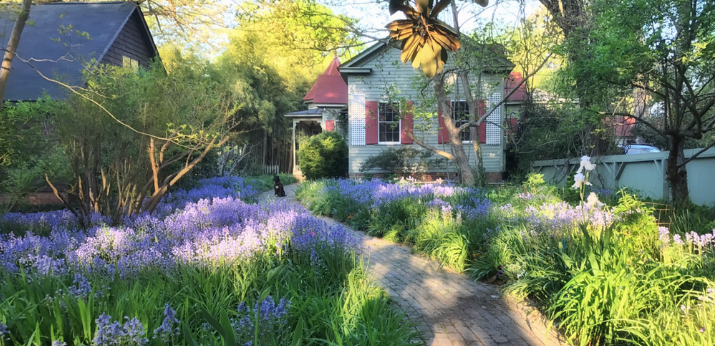
Walk down a normal Raleigh sidewalk in the Cameron Park neighborhood and you'll pass what looks like an ordinary house with an ivy-covered fence. But behind that ivy curtain lies one of Raleigh's most spectacular private gardens—a nearly century-old landscape designed by Isabelle Bowen Henderson in the 1930s and maintained by successive owners who understood its value. The garden covers over an acre, with winding paths, formal plantings, mature trees, and the kind of meticulous design that takes generations to achieve. The property is privately owned and closed to the public, which only adds to its mystique. Once or twice a year, the Raleigh Historic Society or similar organizations arrange tours for $15—when they do, tickets sell out instantly. If you miss the tours, you can only imagine what lies behind the ivy.
8
Raleigh Little Theatre Rose Garden
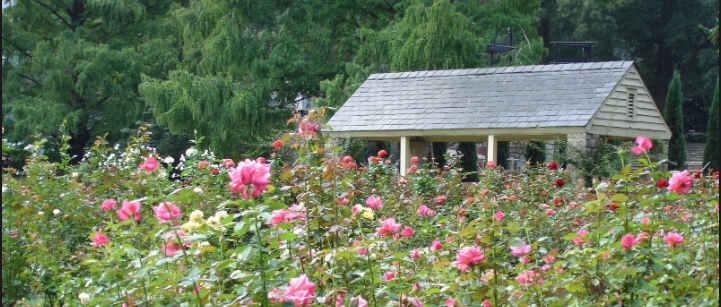
In 1939, a Depression-era WPA crew transformed an "unsightly clay pit of red mud and weeds" into what is now one of the South's most beautiful rose gardens. The 6.5-acre site occupies a natural ravine behind Raleigh Little Theatre, terraced with stone walls and planted with over 1,200 roses representing 60 varieties. A 2,000-seat stone amphitheater rises from the center, used for outdoor performances on summer evenings. The garden is free, open to the public, and almost entirely ignored by tourists who stick to downtown. Peak bloom happens in late April and early May, when the roses explode in color and the air smells impossibly sweet. This is where Raleigh couples have gotten engaged for 80 years, where families have picnicked for generations, and where the WPA's legacy still blooms.
9
Carl Alwin Schenck Memorial Forest
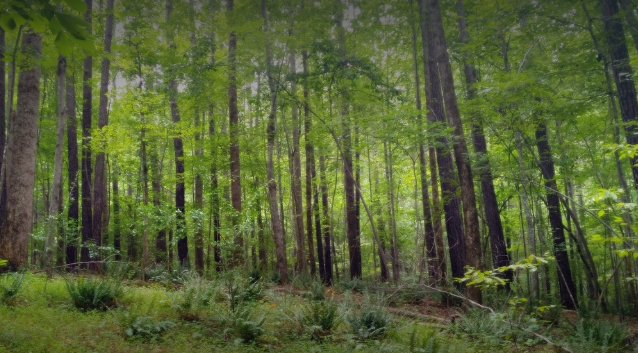
A 245-acre teaching and research forest owned by NC State, hiding in plain sight near campus. Named for the founder of American forestry education, Schenck Forest has been used for silviculture research since 1938. Most people drive past it without knowing it exists. The Frances L. Liles Trail is the most popular path, winding through mature hardwoods and pines with minimal crowds even on weekends. It's a genuine forest — not a manicured park — with the kind of quiet that's increasingly rare near a growing city. Birdwatchers come for the variety; everyone else comes to disappear for an hour.
Dawn to dusk
Free
Sponsored Pick
Advertisements help support our content
10
Geodetic Survey Stones
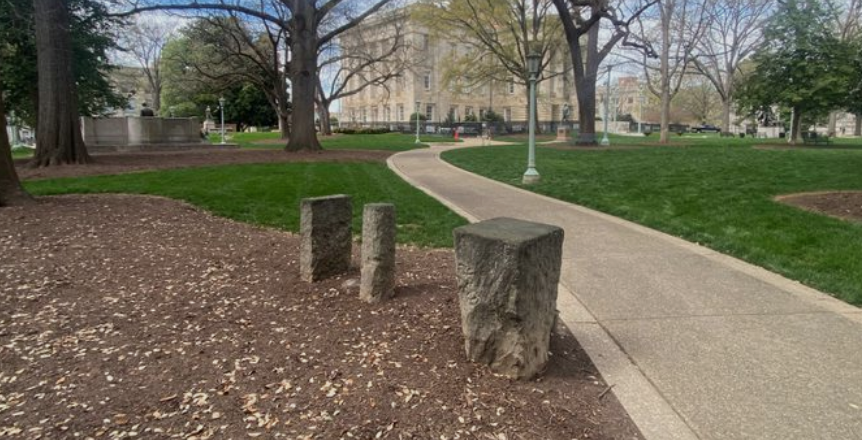
In Union Square, arranged in a precise geometric pattern, sits a collection of cut granite stones that locals have nicknamed "Mini-Stonehenge." There's no sign, no plaque, no explanation—just stones arranged with obvious intentionality in the middle of a public park. The truth is more mundane but still fascinating: these are geodetic survey markers, placed in the late 1800s as part of the U.S. Coast and Geodetic Survey to establish precise geographic coordinates for mapping purposes. The stones mark calibration points and meridian lines. For surveyors, they're technical infrastructure. For everyone else, they're a mysterious arrangement hiding in plain sight, a reminder that even ordinary parks contain layers of history no one thinks to explain.
11
Historic Raleigh Water Tower
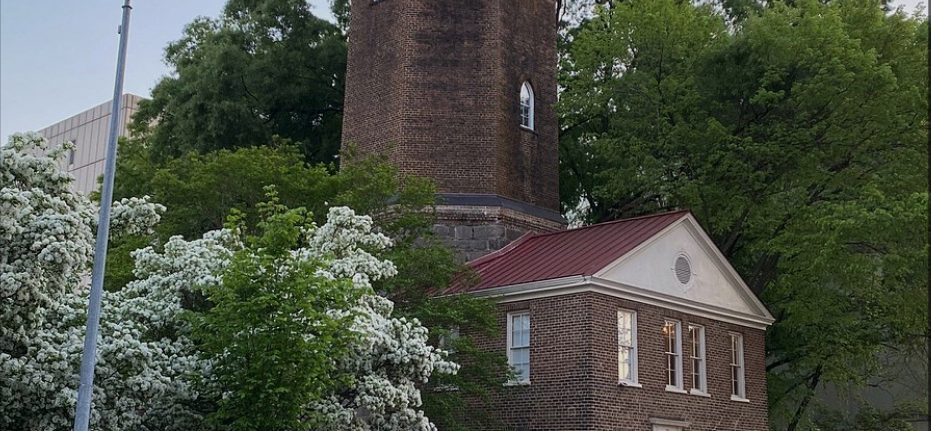
Rising 90 feet above downtown, this Romanesque brick tower has been a Raleigh landmark since 1886—when it was the city's first municipal water system, pumping water to a growing capital. The tower held 350,000 gallons and represented cutting-edge infrastructure for its time. When modern water systems made it obsolete, the city couldn't bring itself to demolish something so beautiful. It sat empty for decades, a National Historic Landmark that most Raleighites walked past without a second glance. In 2019, entrepreneurs transformed the interior into The Tower Escapes, an escape room venue where solving puzzles unlocks rooms in the historic structure. It's the only way to see the inside—and one of the few chances to experience Raleigh history that most locals don't even know exists.
12
Rooftop Arrow
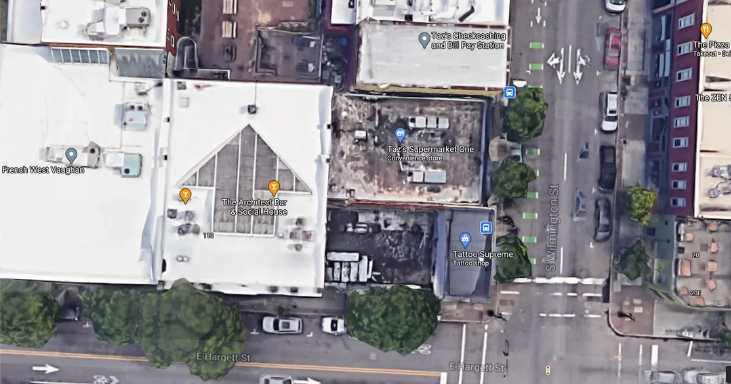
A massive faded yellow arrow painted on a downtown Raleigh rooftop — a relic from aviation's early days. Before radar and GPS, pilots navigated cross-country using visual landmarks. In the 1920s and 30s, the federal government painted giant directional arrows on rooftops across America, pointing pilots toward the nearest airport. This arrow pointed to Raleigh Municipal Airport (now closed). Most of these navigation arrows have been painted over or demolished, making Raleigh's one of the few survivors. The arrow is only visible from above — drones, tall buildings, or aerial photography. WRAL captured aerial footage showing the arrow still clearly visible despite decades of weathering. It's a hidden piece of aviation history, literally hiding in plain sight above downtown.
Sponsored Pick
Advertisements help support our content
13
Old Highway 98 Ghost Road
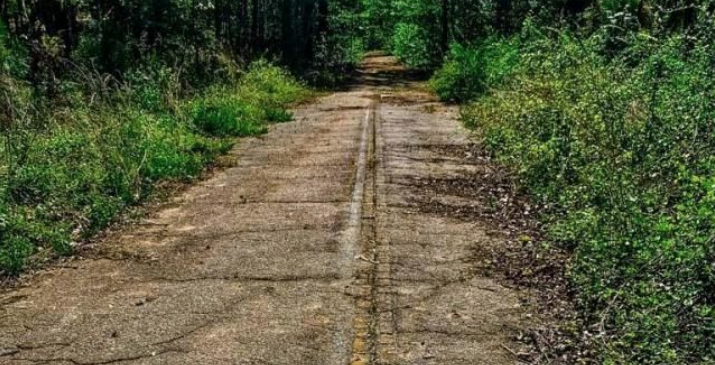
When the Army Corps of Engineers created Falls Lake in 1981, they flooded entire communities—and the roads that connected them. Old Highway 98 was one of those roads. Today, you can hike down the abandoned asphalt for ten minutes or more, watching the pavement crumble and crack, overtaken by weeds and saplings, until the road simply disappears beneath the lake's surface. It's an eerie experience: walking a highway that goes nowhere, past faded lane markings that once carried traffic, into water that swallowed a landscape. Depending on lake levels, more or less of the road is visible. During droughts, you can see the road continuing underwater, disappearing into the murky depths. The feeling is post-apocalyptic—a reminder that human infrastructure is temporary, and that North Carolina is full of drowned places.
14
Mordecai Historic Park
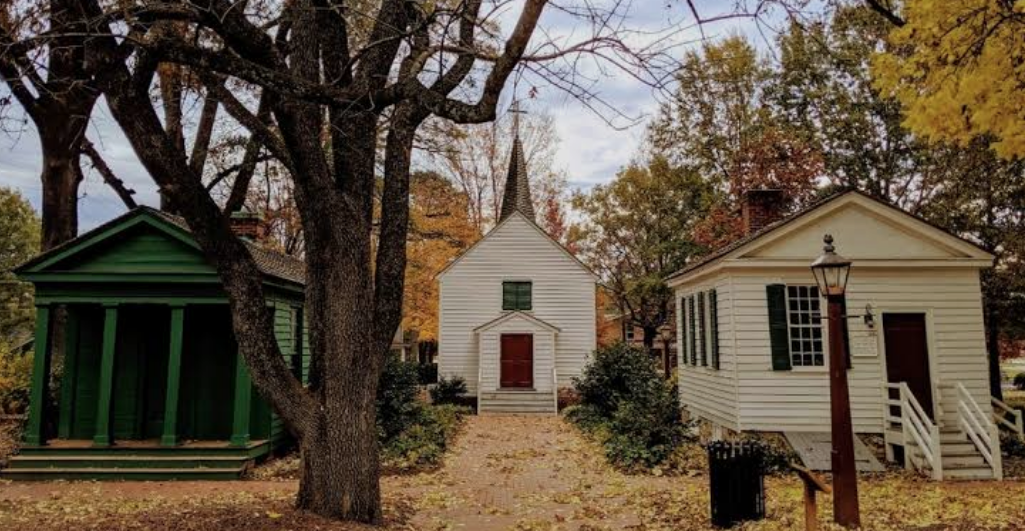
Just north of downtown, a pocket of antebellum Raleigh survives—the Mordecai plantation, preserved as a historic park with the oldest house in the city still on its original foundation. The main house dates to 1785. The grounds contain several other historic structures, including the birthplace of President Andrew Johnson, which was disassembled and moved here piece by piece to save it from demolition. Johnson was born in a tiny kitchen building in 1808, the son of a working-class Raleigh family, before rising to become Lincoln's vice president and the man who oversaw Reconstruction. The park offers a rare glimpse into antebellum Raleigh—both the grandeur of plantation life and the complicated history that underlies it.
15
Dr. M.T. Pope House Museum
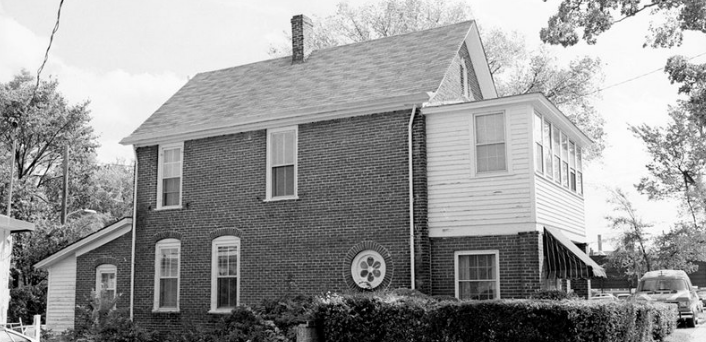
North Carolina has no shortage of historic house museums, but the Dr. M.T. Pope House holds a distinction no other can claim: it's the only African American house museum in the entire state. Dr. Manassa Thomas Pope built this Queen Anne-style home in 1901, at the height of Jim Crow, establishing himself as one of Raleigh's most prominent Black physicians. The house served as both his residence and medical practice, treating Black patients who were turned away from white hospitals. Pope was also a civil rights leader, co-founding the North Carolina Mutual Life Insurance Company and advocating for Black suffrage. The museum receives almost no publicity—most Raleighites don't know it exists. Inside, artifacts and photographs tell the story of Black life in the segregated South, and of one man who built a legacy against the odds.
Sponsored Pick
Advertisements help support our content
16
Ray Price Harley Museum
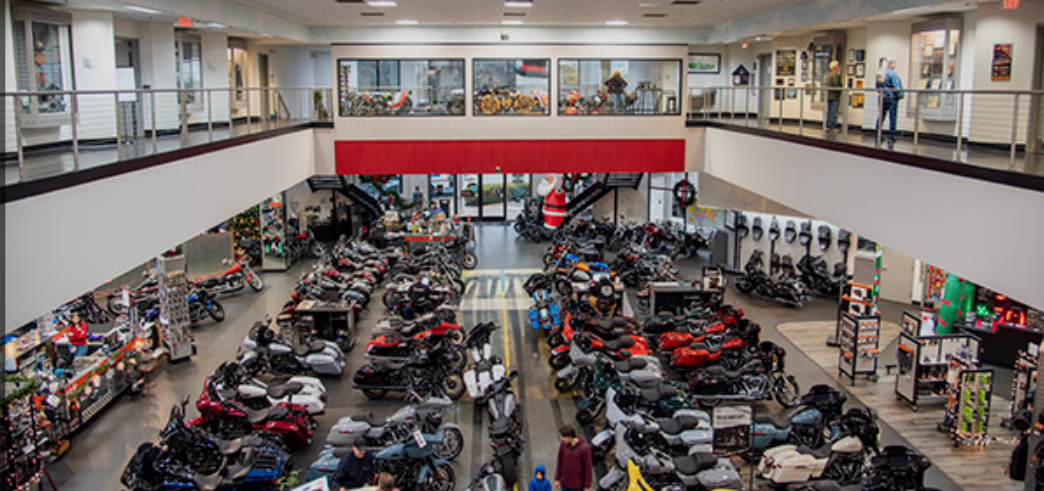
Inside Ray Price Harley-Davidson—a functioning motorcycle dealership on Capital Boulevard—there's a second floor most customers never visit. Up there, hidden above the showroom floor, sits a world-class collection of vintage racing motorcycles, trophies, and memorabilia spanning decades of American motorcycle racing history. Ray Price was a legendary drag racer before he became a dealer; the museum preserves that legacy. Rare machines, championship hardware, and racing leathers share space with photographs from an era when motorcycle drag racing drew crowds in the tens of thousands. You have to ask to go upstairs. Most people buying motorcycles don't think to ask. That's why it qualifies as hidden.
17
Free Expression Tunnel
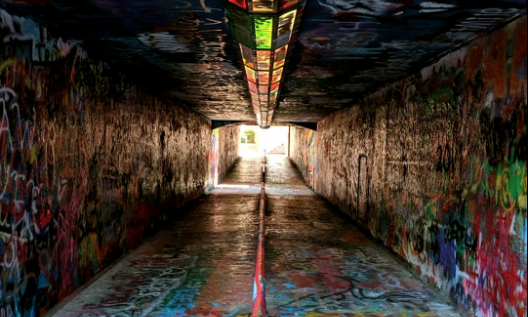
Since 1967, a pedestrian tunnel beneath the railroad tracks on NC State's campus has served as the university's unofficial free speech zone—a 100-yard canvas where anyone can paint anything at any time. The walls are repainted constantly, sometimes multiple times in a single day. Political statements, club advertisements, marriage proposals, memorial tributes, inside jokes, and pure artistic expression layer on top of each other in a constantly evolving collage. The paint is so thick in places that it drips like stalactites. Walking through the tunnel is like walking through the collective unconscious of NC State, with all its passion, humor, and occasional controversy on display. Featured on Atlas Obscura as one of America's most unusual free speech monuments.
18
Dorothea Dix Hospital Cemetery
At the rear of Dix Park, away from the sunflower fields and skyline views that draw weekend crowds, lies a small cemetery where approximately 900 patients of the former Dorothea Dix Hospital were buried between 1859 and 1970. The hospital—originally called the "Insane Asylum of North Carolina"—was the state's first psychiatric facility, and for over a century, patients who died there were buried in these grounds. Many graves were marked only with numbers, not names. A 2014 restoration project identified and restored 275 gravesites, adding proper markers and a memorial. The cemetery is quiet, shaded, and deeply unsettling in the way that all institutional burial grounds are. Dark History Tours offers occasional guided walks that explore both the cemetery and the broader history of mental health treatment in North Carolina.
Sponsored Pick
Advertisements help support our content
19
Spring Hill House & Hunter Cemetery
Tucked away on NC State's Centennial Campus, surrounded by research buildings and startup incubators, stands one of the oldest structures in Wake County—and a cemetery whose oldest grave predates Raleigh itself. Theophilus Hunter Sr. was buried here in 1798, sixteen years before the city was even founded. The Spring Hill plantation house, built around 1790, still stands nearby, now serving as a faculty club. But the real draw for ghost hunters is the persistent reports of paranormal activity: motion sensors triggered nightly on the staircase, visitors hearing infant wails with no source, cold spots that defy explanation. NC State maintains the property with academic skepticism, but the legends persist.
Stay curious
New stories and hidden gems delivered to your inbox.
No spam. Unsubscribe anytime.
Explore More
Discover more curated guides and local favorites.
Raleigh's Best Bars
Dive bars, cocktail lounges, and neighborhood favorites
Explore

Raleigh's Best Coffee Shops
Local roasters, cozy cafes, and third wave spots
Explore
Raleigh's Best Restaurants
From fine dining to hidden gems and local favorites
Explore

Raleigh's Dark History
Unsolved mysteries and darker chapters
Explore
Raleigh's Curiosities
Fascinating facts and surprising stories
Explore
Raleigh's Lost Raleigh
Beloved places we miss
Explore

Seattle Best Bars
Dive bars, cocktail lounges, and neighborhood favorites
Explore
Seattle Best Coffee Shops
Local roasters, cozy cafes, and third wave spots
Explore
Know something we missed? Have a correction?
We'd love to hear from you