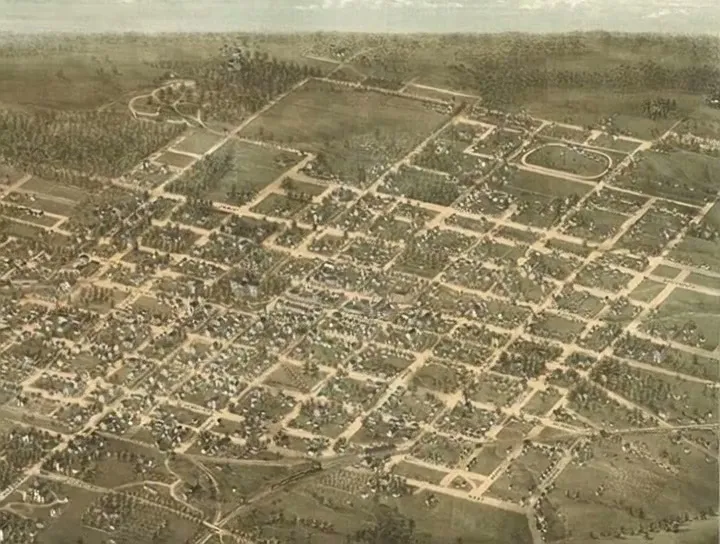
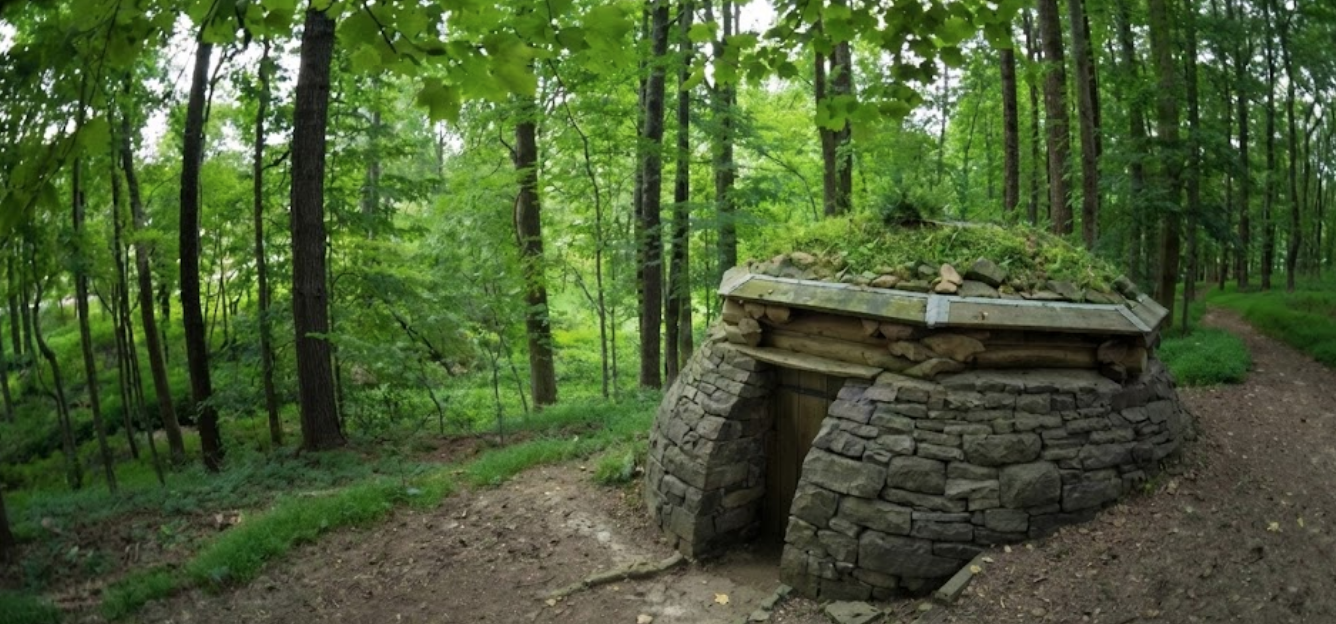
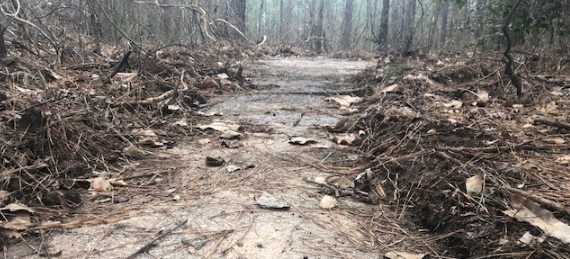
There's a patch of woods near Atlantic Avenue, just north of the Beltline, where something strange happens if you know where to look. Push through the undergrowth, past the industrial buildings and power substations, and you'll find it: about ninety feet of cracked asphalt, covered in pine needles, curving through the trees. It's all that remains of Raleigh Speedway — a NASCAR superspeedway that was supposed to rival Daytona.
In the 1950s, this was one of the fastest tracks in the South. Lee Petty raced here. Fireball Roberts raced here. The track had the first permanent lights in NASCAR history, making it the first speedway to host night races. Bill France Sr., the founder of NASCAR himself, built it. He thought Raleigh would be the capital of Southern racing.
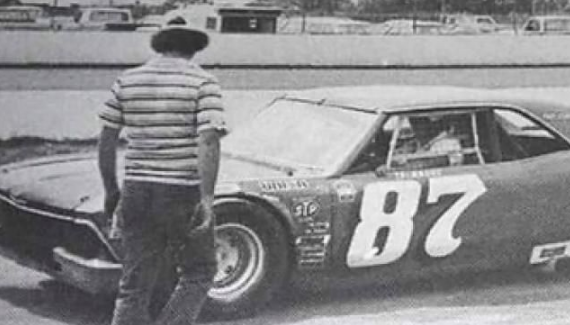
He was wrong. The track lasted seven years. Now it's a ghost, a fragment of asphalt slowly being reclaimed by the forest.
The Track
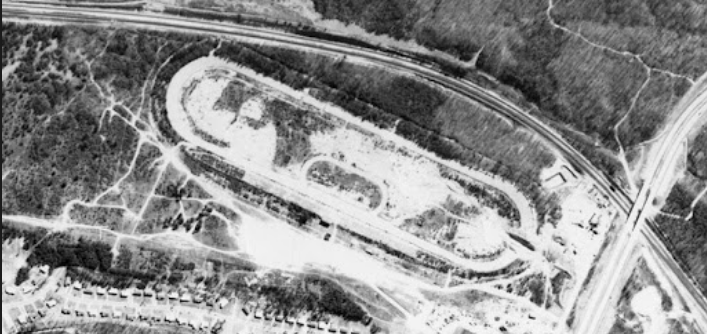
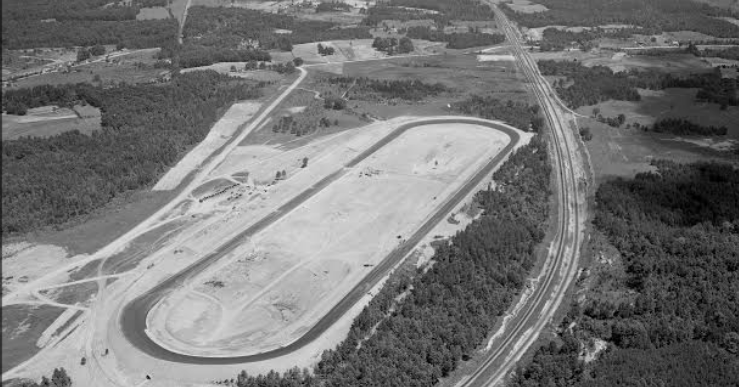
Raleigh Speedway opened in 1952 as Southland Speedway — a one-mile paved oval with a distinctive paperclip shape. It was built by Bill France Sr., the Daytona Beach promoter who had founded NASCAR four years earlier. France saw the future of racing, and he thought that future was in Raleigh.
The location made sense. Raleigh was the capital of North Carolina, the heart of stock car country. The track was accessible to fans across the region. And unlike the beach courses where NASCAR had started, this was a purpose-built superspeedway — fast, banked, and designed for the kind of racing that would define the sport's future.
France invested in the track heavily. In 1955, he installed permanent lighting — the first at any NASCAR facility. Night racing was born in Raleigh. For a brief moment, the track was the most advanced in the sport.
"Raleigh was supposed to be what Daytona became. Bill France built it to be the showcase of NASCAR. The lights, the facilities, everything was first-class. It should have been the center of Southern racing."
— Racing historian, Interview, Raleigh News & Observer
The Racing
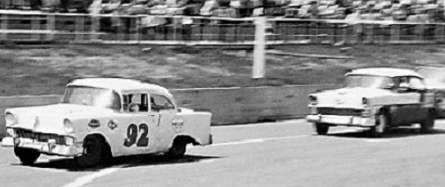
The races at Raleigh Speedway drew the biggest names in early NASCAR. Lee Petty — Richard Petty's father, a three-time NASCAR champion — won multiple races at the track. Fireball Roberts, one of the most legendary drivers of the era, competed regularly. Tim Flock, Buck Baker, Junior Johnson — the giants of 1950s stock car racing all raced at Raleigh.
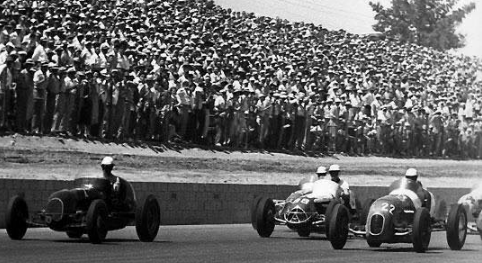
The track hosted both NASCAR Grand National races (the predecessor to today's Cup Series) and Convertible Division races — a now-defunct series where drivers raced with their tops down. It also hosted AAA Indy car events, drawing open-wheel racers to the Raleigh oval.
The night races were the main attraction. Under the lights, with engines roaring and dust rising in the humid Carolina air, Raleigh Speedway was as exciting as any track in America. Thousands of fans packed the grandstands. For seven years, this was big-time racing.
First Under the Lights
Raleigh Speedway was the first NASCAR track with permanent lighting, making it the birthplace of night racing in stock cars. The innovation allowed races to be held in the evening, when temperatures were cooler and fans could attend after work. Night racing is now standard across NASCAR.
The Death
What killed Raleigh Speedway wasn't competition or finances — it was the city itself. As Raleigh grew in the 1950s, neighborhoods spread toward the track. Residents complained about noise. Roaring engines on Saturday nights didn't fit the image of a growing Southern capital.
The fatal blow came from city officials: they refused to allow racing on Sundays. For a sport that depended on weekend crowds, this was devastating. Fans couldn't attend Saturday night races and then come back Sunday afternoon. The economics collapsed.
The last NASCAR race at Raleigh Speedway was held in 1958. The track sat dormant for eight more years, slowly deteriorating. In 1966, the property was sold. The following year, the track was demolished and an industrial park rose on the site.
"Politicians put a ban on Sunday racing, and neighbors began to complain of the noise, the danger, and the wild crowds... Raleigh could have been Daytona."
— Raleigh Speedway Historical Project, raleighspeedway.org
What Remains
Almost nothing survives of Raleigh Speedway. The grandstands are gone. The pits are gone. The infield where cars once roared is now covered by warehouses and substations. But not everything was erased.
Hidden in the woods behind a Progress Energy substation, about ninety feet of the track's backstretch still exists. The asphalt is cracked and weathered, covered with pine needles and leaves. Trees have grown through the pavement in places. But if you know where to look, you can still walk on the surface where Fireball Roberts once pushed 150 miles per hour.
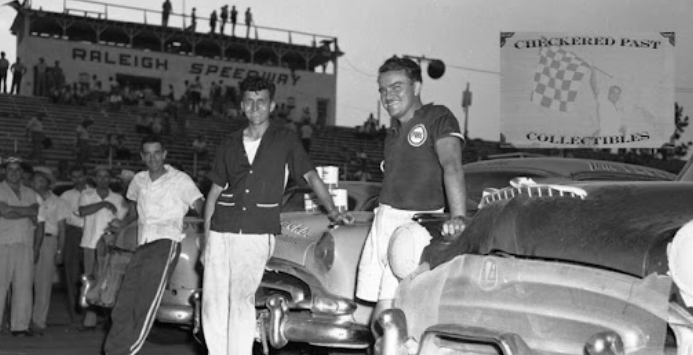
Local racing historians have documented the surviving fragment. They've created maps showing where the track once lay, overlaid on modern aerial photos. The curves are still visible in property lines and road alignments — ghost geometry from a vanished speedway.
Finding the Remains
The surviving portion of Raleigh Speedway is on private property behind an industrial complex off Atlantic Avenue. The track sat west of Atlantic Avenue, north of what is now I-440, east of Bush Street. The fragment that remains is not officially accessible to the public.
The Legacy
Bill France Sr. didn't give up on his vision of a Southern racing capital. After Raleigh failed, he turned his attention to Florida. In 1959, the year after Raleigh Speedway's last race, Daytona International Speedway opened. It became everything Raleigh was supposed to be — the center of NASCAR, the most famous track in stock car racing.
Raleigh's loss was Daytona's gain. The innovations tested at Raleigh — night racing, superspeedway design, professional facilities — all found their ultimate expression in Daytona. The track that should have put Raleigh on the map instead put Daytona Beach there.
Today, there's a dedicated website (raleighspeedway.org) archiving materials related to the track — photographs, race results, memories from people who were there. Racing historians consider Raleigh Speedway one of NASCAR's most significant lost venues, a road not taken that shaped the sport's geography.
In the woods near Atlantic Avenue, ninety feet of asphalt curve through the trees. Pine needles cover the track surface. Weeds push through cracks in the pavement. It doesn't look like much — just another forgotten fragment of an earlier Raleigh, slowly returning to the forest.
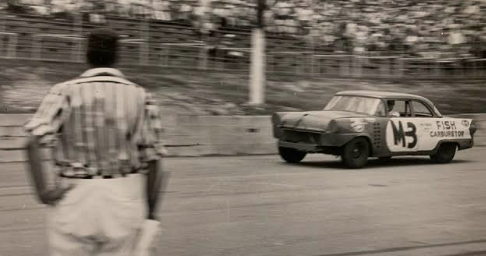
But sixty years ago, this was where NASCAR's future was being built. Lee Petty won here. Night racing was invented here. Bill France Sr. dreamed of making Raleigh the capital of Southern motorsports. The dream died, and Daytona rose instead.
Somewhere under the industrial parks and substations, the rest of the track lies buried. The grandstands are gone. The lights are gone. The roar of engines faded decades ago. All that's left is a fragment in the woods, a ghost track where legends once raced, waiting for someone to remember.
Learning More
The Raleigh Speedway Historical Project (raleighspeedway.org) maintains an archive of photographs, race results, and oral histories from the track. The site includes maps showing the track's location overlaid on modern aerial imagery. Occoneechee Speedway, another abandoned NASCAR track near Hillsborough, NC, is better preserved and open for tours.