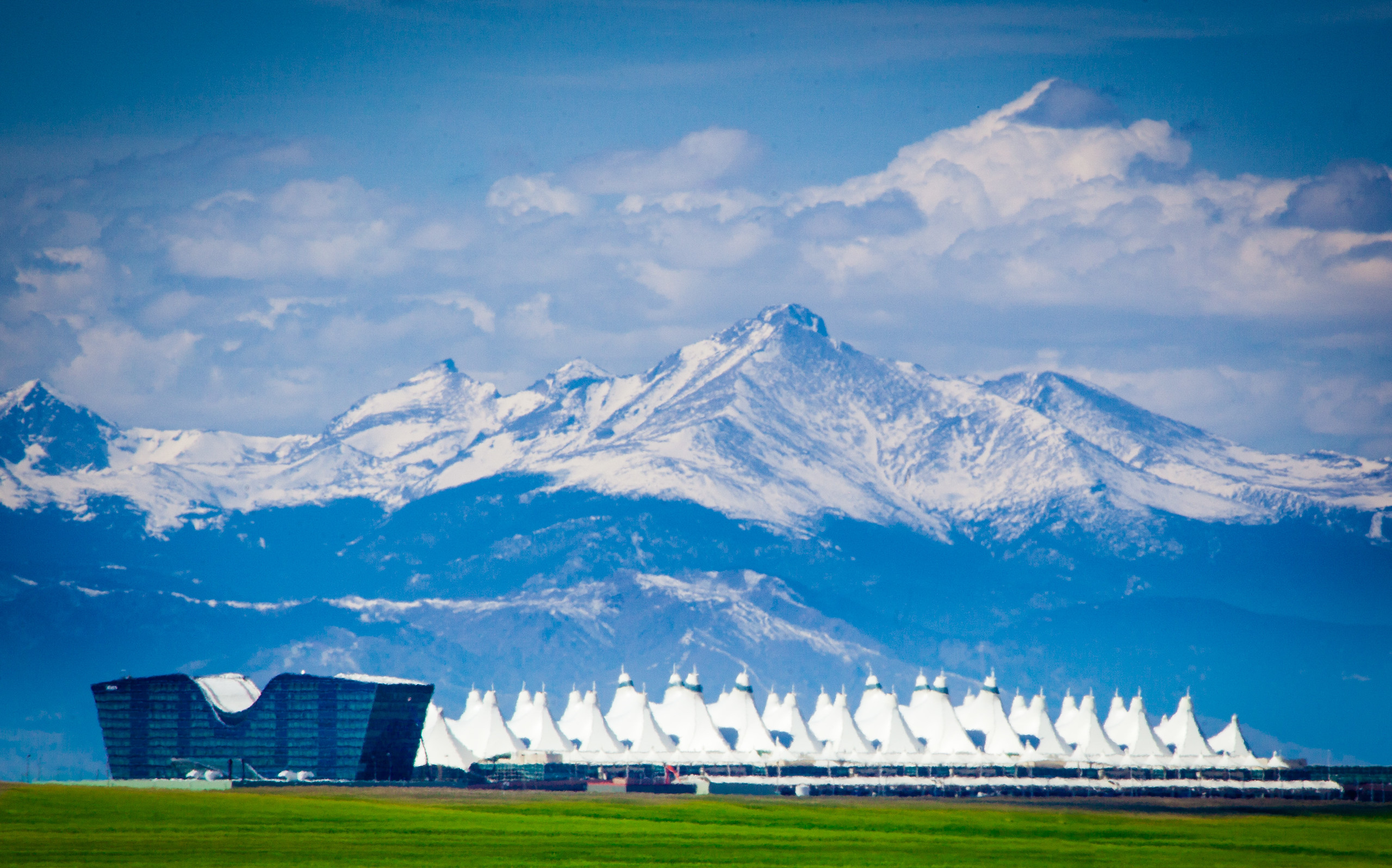
General William Jackson Palmer founded Colorado Springs in 1871 as a resort town for wealthy tuberculosis patients, a place where the dry mountain air and sunshine might cure what medicine could not. He was a Quaker, a teetotaler, a railroad man who had made his fortune building the Denver & Rio Grande Western, and he imagined his city as a genteel alternative to the mining towns that scarred the mountains — no saloons, no gambling, no industry, just health and cultivation and views of Pikes Peak. The city he built was nicknamed "Little London" for its English expatriates and its aspirations to refinement.
What Palmer could not have imagined was that his resort town would become the evangelical Vatican of America. The transformation began quietly in the 1980s, when James Dobson brought Focus on the Family from California, seeking a more conservative climate for his Christian media empire. The eighty-one-acre campus rose on the north side of town—broadcasting studios, counseling centers, a welcome center with a three-story indoor playground that draws 250,000 visitors annually. Other ministries followed: the Navigators, Young Life, Compassion International, hundreds more, until Colorado Springs became the de facto headquarters of American evangelical Christianity. The Air Force Academy, built in the 1950s with its famous aluminum chapel thrusting seventeen spires toward heaven, added military conservatism to the religious kind. Cadets attended mega-churches off base. Retired officers joined ministry boards. The fusion happened naturally, organically, two versions of American conservatism finding each other in the shadow of the mountain.
14,115 Feet of Witness
Pikes Peak rises 14,115 feet above sea level, dominating the western horizon, visible from a hundred miles out on the plains where Kansas wheat farmers once navigated by its silhouette. Katharine Lee Bates reached the summit by mule in July 1893, looked east at the prairie unfurling toward Kansas in gold and green, and wrote the lines that would become "America the Beautiful"—the spacious skies, the purple mountain majesties, all of it visible from that one spot. The mountain is the most visited peak in North America now: half a million people annually taking the cog railway or driving the nineteen-mile toll road, arriving at the summit to gasp in the thin air and eat doughnuts at the world's highest bakery. Below the peak, the Garden of the Gods thrusts three-hundred-million-year-old sandstone into formations that predate the mountain itself—Cathedral Spires, Kissing Camels, Balanced Rock—red against blue sky, the whole scene so improbable that the early settlers thought it must be sacred, and the city that grew around it has had the wisdom not to develop inside the park boundaries.
"Colorado Springs is where American Christianity and American militarism meet and mingle and reinforce each other."
The military presence is vast enough to reshape everything. Fort Carson sprawls across 137,000 acres south of the city—four combat divisions, 25,000 soldiers, a population larger than most Colorado towns. Peterson Space Force Base tracks every object orbiting Earth, satellites and debris and the occasional Chinese spy balloon. At Schriever, thirty miles east, thirty-one GPS satellites answer to the technicians who keep your phone knowing where it is. And deep inside Cheyenne Mountain, behind twenty-five-ton blast doors and a thousand feet of granite, NORAD watches the northern sky for the missiles that never came during the Cold War and could still come now. The military pumps $10 billion annually into the local economy. The retirees stay when their tours end, buying houses in developments with names like Fort Carson Heights. The politics follow the uniforms: hawkish, orderly, suspicious of anything that sounds like it came from a coast.
Two Cities in One
The tension in Colorado Springs is not between left and right but between its two founding impulses: health resort and fortress. The city that Palmer imagined — cultured, peaceful, devoted to natural beauty — still exists in the hiking trails of North Cheyenne Cañon Park, in the old tuberculosis sanatoriums converted to boutique hotels, in the artsy Manitou Springs enclave at the foot of the pass. But this city coexists with another, one of megachurches and military contractors, of subdivisions spreading across the prairie and evangelical bookstores in every strip mall.
The outdoor recreation industry has grown alongside the military-evangelical complex. The Olympic Training Center relocated here in 1978, drawn by the altitude that forces athletes to produce more red blood cells. Professional cyclists and runners and triathletes train on the roads and trails, their lean bodies a contrast to the suburban sprawl they navigate. The climbing at Garden of the Gods is world-class. The trails through Red Rock Canyon rival anything in Colorado. The city has two faces — the contemplative and the combative — and both look up at the same mountain.
The growth has been relentless. Colorado Springs is now the second-largest city in Colorado, sprawling north toward Denver in a corridor of development that threatens to merge the two metros into a single megacity along the Front Range. Water is the limiting factor — it always is in the West — and the city has bought water rights from farmers across the Arkansas River basin, piping it across the mountains to feed the subdivisions. The aquifer beneath the city is dropping. The snowpack that feeds the rivers is shrinking. The growth continues anyway.
"The city has two faces — the contemplative and the combative — and both look up at the same mountain."
The city votes Republican with a reliability that Democrats have learned not to waste resources challenging. But within that conservatism, factions compete: the libertarian strain that wants government out of bedrooms and boardrooms alike, the religious conservatives who want biblical values encoded in law, the military families who want a strong defense and not much else. The Gazette runs editorials that could have been written in 1950. The Springs, as locals call it, knows what it believes, even if those beliefs sometimes contradict each other.
To visit Colorado Springs is to encounter America's contradictions concentrated in one place. The natural beauty is undeniable—the red rocks catching the first light of dawn, the peak snow-capped even in July, the clean mountain air that still does exactly what Palmer said it would. The military-religious-industrial complex is equally undeniable, shaping everything from real estate prices to restaurant hours to the topics you learn not to raise at parties. Palmer's vision of a health resort has become something he could never have predicted: a city where megachurch pastors dine with missile commanders, where Olympic marathoners share trails with infantry platoons on training runs, where the most visited natural wonder in Colorado is surrounded by subdivisions named for the farms they replaced. Pikes Peak watches it all from above, as it watched the Ute people who called it Tava—the Sun Mountain—for ten thousand years before Palmer arrived, as it will watch whatever comes after the ministries and the bases and the sprawl have had their moment. The mountain is patient. The mountain was here before. The mountain will remain.