Robert Hansen was a man of contradictions that should have been visible but somehow weren't. By day, he ran Hansen's Bakery in downtown Anchorage, a respected small business that made breads and pastries for the community. He was married, had two children, owned a house in Muldoon. He flew his own plane into the wilderness, hunting big game with the skill of someone who had spent his life studying how animals moved and where they hid. Neighbors found him quiet but polite. Customers found his baked goods satisfactory. For twelve years, between 1971 and 1983, nobody found the other Robert Hansen—the one who kidnapped at least seventeen women, flew them into the Alaska backcountry, released them into the wilderness, and hunted them like caribou.
The making of a serial killer often begins with rejection, and Hansen's began early. Born in Iowa in 1939, he grew up with severe acne and a pronounced stutter that made him a target for bullying. Girls avoided him. Social situations tormented him. The only place he found competence was in the woods, where he learned to track and hunt with a patience that bordered on obsession. He would later tell investigators that his resentment of women—especially attractive women who had rejected him—began in those adolescent years. The hunting skills he developed as a lonely teenager in the Iowa countryside would eventually find different prey.
A New Hunting Ground
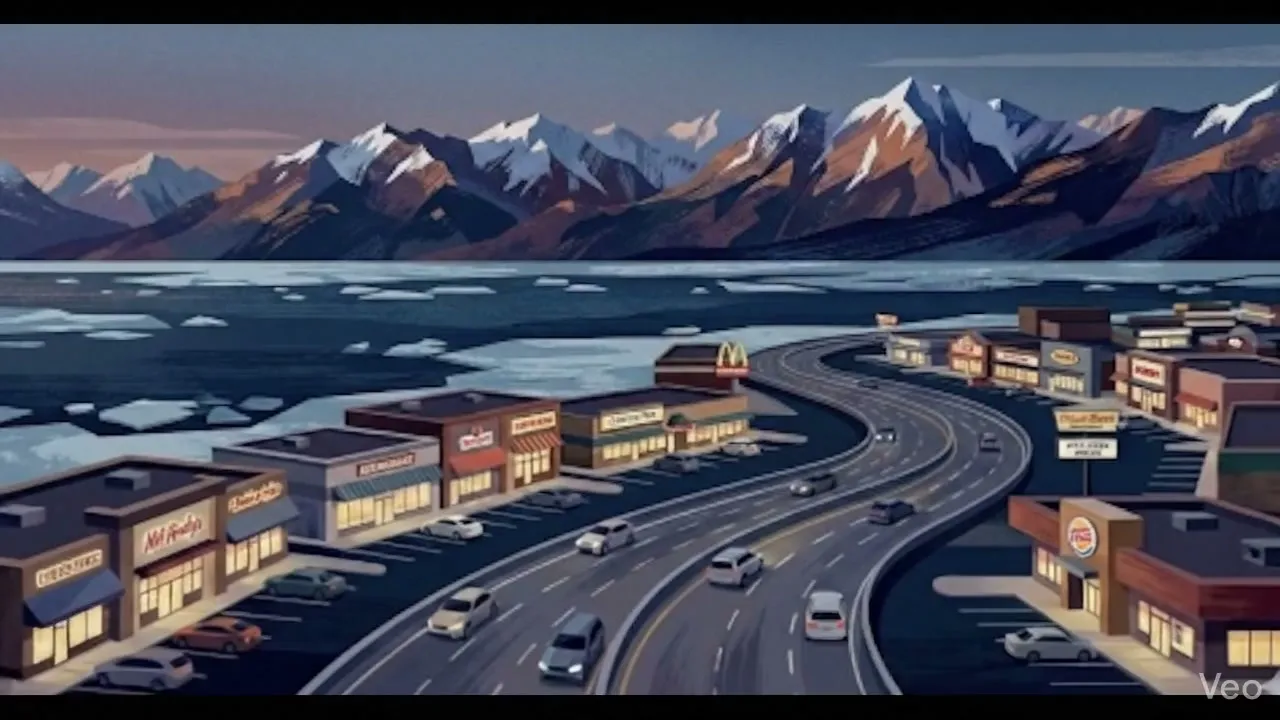
Hansen arrived in Alaska in 1967, drawn by the same frontier promise that attracted so many others: a place to reinvent yourself, to escape the past, to become someone new. He opened his bakery and built a life that, on the surface, looked like success. But Alaska offered him something else too. Three hundred and sixty-five million acres of wilderness, most of it uninhabited and unpatrolled. Bush planes that could land on glacial lakes and gravel bars far from any road. A transient population full of people who came and went without anyone tracking their movements. And Fourth Avenue.
Fourth Avenue in the 1970s and 1980s was Anchorage's red-light district, a strip of bars and strip clubs that had exploded during the pipeline boom when tens of thousands of workers flooded into Alaska with more cash than they'd ever seen. Comedian Bob Hope called it "the longest bar in the world." The clubs were connected to organized crime, the Frank Colacurcio organization from Seattle running operations through shell companies and convicted felons. Dancers were flown in from the Lower 48 with promises of easy money. Many of them were young, estranged from family, working jobs that existed in legal gray zones. They were exactly the victims Hansen was looking for: women who wouldn't be missed.
"He chose victims he believed nobody would miss. He was right about many of them."
His method was almost recreational. Hansen would approach women from the clubs, sometimes posing as a customer, sometimes offering money for sex. Once he had them alone, he would abduct them at gunpoint, take them to his home where he had built a soundproof room, assault them, and then load them into his Piper Super Cub. He would fly them to remote areas of the Knik River Valley—land he knew intimately from years of legitimate hunting. There, he would give them a head start and hunt them with a Ruger Mini-14 rifle and a hunting knife. The skills he had developed tracking deer and moose in Iowa he now applied to women running for their lives through the Alaska wilderness.
The One Who Escaped
Cindy Paulson was seventeen years old on June 13, 1983, when Hansen picked her up on Fourth Avenue. He offered her $200 for oral sex in his car, then pulled a gun. He drove her to his house in Muldoon, where he chained her by the neck to a post in his basement, raped her repeatedly over several hours, and told her she was going to die. He loaded her into his car to drive to Merrill Field, where his plane was waiting. But at the airport, while Hansen was loading the plane, Paulson made a break for it. She ran toward the road, still wearing handcuffs, and flagged down a passing trucker.
When police initially interviewed Hansen, they believed him over Paulson. He was a respectable businessman. She was a teenage prostitute. The local cops let him go. But Alaska State Trooper Sergeant Glenn Flothe wasn't satisfied. He connected Paulson's description to a pattern of missing women—dancers from Fourth Avenue who had vanished over the previous years. He obtained a search warrant for Hansen's home and found the evidence that would end the killing: a detailed aviation map with twenty-four marked locations, jewelry belonging to missing women, the Ruger Mini-14 rifle that ballistics matched to recovered bodies, and the handcuffs Paulson had described.
Hansen eventually confessed to seventeen murders, though investigators suspect there were more. He led them to twelve burial sites in the wilderness. The other bodies have never been found. Some of his victims remain unidentified even now. "Eklutna Annie," found in 1980, was given her name by investigators because they didn't know who she was—she was likely Hansen's first kill, murdered around 1979. "Horseshoe Harriet" remained nameless for four decades until DNA genealogy identified her in 2022 as Robin Pelkey, a woman who had been living in Anchorage in the early 1980s. The wilderness that Hansen used as his hunting ground also served as his accomplice, hiding his victims so thoroughly that many will likely never be found.
The Landscape of Predation
Hansen's case illuminated something that Alaska had long known but rarely acknowledged: the frontier was a landscape designed for predation. The same vastness that drew adventurers and dreamers also attracted those who understood that a body buried in the backcountry might never be found. The same transient population that enabled reinvention also created an endless supply of people who could vanish without triggering alarm. The same sparse law enforcement that meant freedom from regulation also meant that killers operated with impunity. Alaska has the highest rate of serial killings per capita of any state—15.65 per million inhabitants. Hansen helped explain why.
"The wilderness that surrounds Anchorage offers something that killers need: a place to make people disappear."
Hansen was sentenced to 461 years plus life without parole. He served his time at Spring Creek Correctional Center in Seward, where he died in 2014 at the age of seventy-five. He never expressed remorse. In interviews, he blamed his victims for their own deaths, suggesting that women who worked as dancers or prostitutes had forfeited their right to protection. He maintained that his rage was justified by the rejections he had suffered as a young man. He died believing he had done nothing wrong except get caught.
The investigation into Hansen's victims continues. In 2022, the DNA Doe Project identified Robin Pelkey after forty years. Other victims remain nameless, their identities lost to time and the deliberate anonymity that Hansen sought in his targets. Somewhere in the Knik River Valley, there may be graves that have never been found, women whose families never knew what happened to them, whose disappearances were never even reported. The Alaska wilderness is vast enough to keep secrets indefinitely. Hansen understood this. He counted on it.
Cindy Paulson survived. She testified against Hansen at his trial and was instrumental in his conviction. Her escape—running through an airport in handcuffs, flagging down a stranger for help—broke open a case that might otherwise have continued indefinitely. Hansen had been operating for twelve years. He was meticulous, patient, and confident. Without Paulson's courage, he might have kept hunting until old age stopped him. The women of Fourth Avenue owe their lives to a seventeen-year-old who refused to die quietly.
The clubs on Fourth Avenue are mostly gone now, shut down in 1983 after investigators exposed their organized crime connections. The pipeline boom ended, the money dried up, and the street that once drew thousands of workers with cash to burn became just another part of downtown. Hansen's Bakery closed long ago. The house in Muldoon where he kept his victims was torn down. But the wilderness remains—the same wilderness where Hansen perfected his hunting skills, where he took his victims to die, where some of them still lie undiscovered. Alaska hasn't changed. The frontier still offers cover to those who seek it. The lesson of Robert Hansen is that some predators look exactly like everyone else, and some landscapes are built to hide the evidence of what they do.