
Sunshine and Hustle
Strip malls, strip clubs, and 300 million hand-rolled cigars that built a city in Miami's shadow
Tampa is not Miami, and the distinction matters. Miami is glamorous and Latin and looks toward the Caribbean; Tampa is scrappier, more Southern, oriented toward the Gulf of Mexico and the interior of Florida. Miami has Art Deco and celebrity; Tampa has strip clubs and strip malls and a working port. The two cities exist in different Floridas, and Tampa has spent a century in Miami's shadow, building its own identity out of cigars and shipping and an aggressive, almost desperate boosterism.
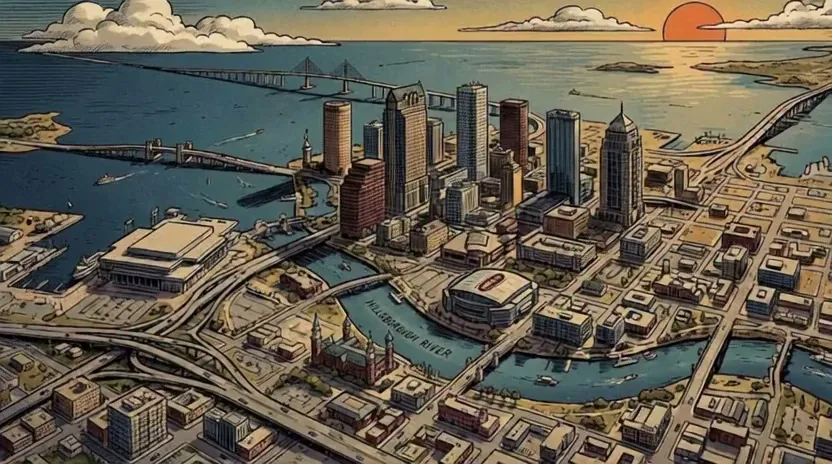
The bay defines everything. Hillsborough Bay and Tampa Bay create a geography of bridges and causeways, of waterfront that seems endless, of channels dredged for shipping and pleasure boats alike. The port is Florida's largest, handling phosphate fertilizer and citrus and cruise ships, the industrial infrastructure that makes the glamour elsewhere possible. The bay is also beautiful, particularly at sunset when the water turns copper and pink, and this beauty coexists with the industry in ways that Tampa has learned not to apologize for.
The Neighborhood That Made Tampa
Ybor City made Tampa. In 1885, Vicente Martinez-Ybor moved his cigar manufacturing from Key West to a patch of scrubland east of Tampa, and within a decade the neighborhood was producing hundreds of millions of cigars annually. Cuban, Italian, and Spanish workers rolled tobacco by hand in factories where lectors read newspapers and novels aloud to pass the time. The neighborhood was radical and cosmopolitan, a polyglot community where labor organizing and anarchist politics flourished alongside mutual aid societies and social clubs.
Miami has Art Deco and celebrity; Tampa has strip clubs and strip malls and a working port.
The cigar industry collapsed after World War II — machines replaced hand-rolling, cigarettes replaced cigars, Cuba became inaccessible. Ybor City emptied and deteriorated, the beautiful brick factories abandoned, the social clubs shuttered. Urban renewal threatened to bulldoze what remained. But the neighborhood survived, barely, and has been reborn as an entertainment district, the old buildings now housing clubs and restaurants, the brick streets carrying bachelor parties rather than cigar workers. The ghosts are still there if you look for them.
Boom and Bust and Boom
Tampa has experienced more booms and busts than most American cities. The railroad arrived in 1884 and triggered the first. Henry Plant built a Moorish palace of a hotel that still stands, trying to make Tampa a destination resort.
The cigar boom followed, then the Florida land boom of the 1920s that collapsed spectacularly.
The postwar era brought military bases and suburbs and snowbirds. Each cycle left its mark on the built environment, the city a palimpsest of ambitions realized and abandoned.
The current boom is driven by the same forces transforming all of Florida: remote work refugees from expensive metros, retirees, and the low taxes and business-friendly regulation that draw companies south. Tampa has been discovered, and the discoverers are bidding up housing and filling the restaurants and complaining about the traffic. The city that was always overshadowed by Miami and Orlando is suddenly desirable on its own terms.
The lightning gives Tampa its nickname: the Lightning Capital of North America. Summer afternoon thunderstorms arrive with the reliability of tides, the sky darkening, the thunder rolling, the rain coming down in sheets that turn streets into rivers. The storms pass quickly, the sun returns, steam rises from the pavement. This pattern repeats daily from June through September, and Floridians learn to plan around it, scheduling outdoor activities for morning, expecting the afternoon deluge.
Each cycle left its mark on the built environment, the city a palimpsest of ambitions realized and abandoned.
The hurricane risk is constant and largely ignored until it isn't. Tampa Bay has not taken a direct hit from a major hurricane since 1921, a century of near-misses that has allowed millions of people to build in flood zones and evacuation areas. The bay's shape funnels storm surge toward downtown, and models of a worst-case scenario show catastrophic flooding. The city knows this, plans for this, and continues to build along the waterfront anyway, because that's where people want to live and short-term profit consistently defeats long-term planning.
The sports culture is recent and intense. The Buccaneers were a joke for decades before winning Super Bowls in 2002 and 2021, the latter with Tom Brady in his improbable Florida chapter.
The Lightning have won three Stanley Cups since 2004, bringing hockey passion to a place where ice is artificial and winter is a rumor. The Rays play in a domed stadium that everyone agrees should be replaced but no one can agree how to fund. Tampa has become a championship city, and the identity shift is still settling in.
To live in Tampa is to live in a city still becoming itself, still uncertain whether it's a regional hub or a national destination, still negotiating between its working-class port heritage and its aspirations to something more polished. The bay sparkles, the storms roll through, the ghosts of Ybor City smoke phantom cigars in the entertainment district, and the cranes keep building condos on the waterfront. Tampa has always been about hustle — cigars, shipping, whatever comes next — and the hustle continues.